
Community
Project in Lake Superior seeks to find and better understand mysterious cosmic particles
By Marcus Chen
Advertisement · Why this ad?
Katherine oversees editorial operations across all six brands. Before joining The Meridan Group, she spent 14 years at the Minneapolis Star Tribune, where she led the metro desk through its digital transformation. She holds a Master's in Journalism from Northwestern's Medill School.
More from Katherine →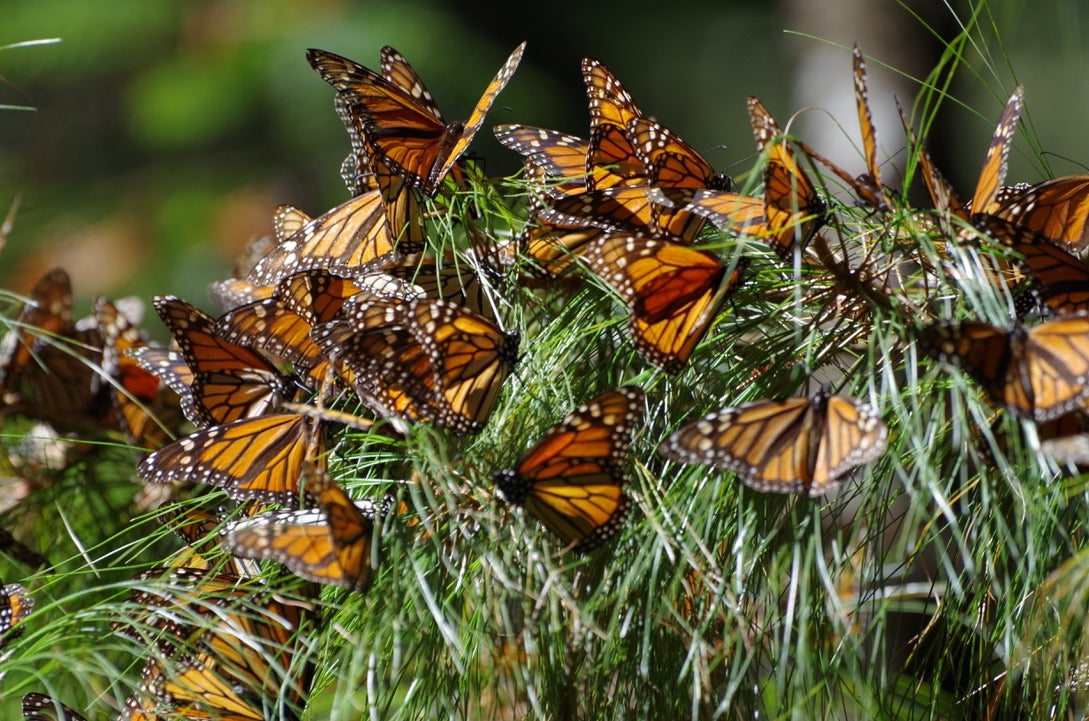
After a nearly 1,400 mile flight, Snickers has made it. And so have David, Nancy, Otto and Bug — just to name a few. They’re the monarch butterflies who have been tracked by the Southern Wisconsin Bird Alliance since September when they were tagged in Wisconsin. Their migration journey ends in Mexico and new technology shows many of the butterflies have crossed the finish line. Understanding Wisconsin, Together. WPR’s “Wisconsin Today” newsletter keeps you connected to the state you love without feeling overwhelmed. No paywall. No agenda. No corporate filter. X/Twitter This field is for validation purposes and should be left unchanged. Email Subscribe Southern Wisconsin Bird Alliance glued 30 solar-powered radio tags onto the backs of monarch butterflies at Goose Pond Sanctuary near Madison. Since then, their migration patterns have been tracked by researchers with the app Project Monarch. The app detects monarchs in real time. Snickers was detected 944 times in seven states before crossing the Mexico border. “There was never really a way to track an individual and see what the migration path is like on an individual basis, so being able to do that on that scale with a whole collection of monarchs is really, really powerful,” Brenna Marsicek, the director of outreach at Southern Wisconsin Bird Alliance, said. She said monarch migration will continue into December, but 10 of the organization’s tagged butterflies have already made it to Mexico. “This is an astounding distance for a tiny insect to fly. So we have 10 that are in Mexico that have flown that incredible journey,” Marsicek said. One of the butterflies has made it all the way to her destination. “So Nancy, one of the butterflies, flew over 1,770 miles between Goose Pond and where it is now in Mexico, where it’ll overwinter,” she said. But 14 of the monarchs haven’t been spotted by the app in over a month. “They might resurface, they might just be in a really remote part of the country and not pinging against phones, or it could be that they’re dead,” Marsicek said. “Either way, it’s interesting data to know approximately how many butterflies actually make it into Mexico.” One of the objectives of tagging the monarchs is to improve conservation efforts by increasing understanding of migration patterns. Marsicek said some butterflies flew north to Minneapolis before continuing their journey south. The theory is that this happened due to eastern wind patterns. “It was just a really interesting revelation that a butterfly would go that far in sort of the wrong direction before continuing their migration,” she said. “It’s been a really powerful tool for us to learn about this species that’s in major decline and needs some really significant help from us to be able to persist into the future.” Once monarchs make it to Mexico, they rest in the oyamel fir forests, which are nearly 2 miles above sea level and an ideal microclimate for butterflies. Eventually they lay eggs for the next generation to travel north. The first generation are the offspring of monarchs who overwintered in Mexico. It takes three to four generations, each traveling further north, to reach the northern United States and Canada. The last generation will be the ones who take the long journey south. Monarchs that migrate south live significantly longer than their ancestors who typically only live two to six weeks. Marsicek said after this year’s migration period ends, researchers will analyze the data to come up with conservation strategies for 2027. She said Southern Wisconsin Bird Alliance is coming up with plans to tag butterflies again next summer. “It’ll really inform a lot of conservation work that’s done in Wisconsin and throughout the country, as we learn more about what their migration is like and the habitats they rely on,” she said. “It’ll teach us a lot and empower us to help them in the future.” Wisconsin Public Radio, © Copyright 2026, Board of Regents of the University of Wisconsin System and Wisconsin Educational Communications Board. Related Stories Wisconsin using new tracking technology to better understand monarch butterfly migration Monarch butterflies thrived in Wisconsin this year, researcher says
By Marcus Chen

By Marcus Chen

By Marcus Chen

By Katherine Langford